Bird Communication: Do They Share Food Locations?
Imagine watching a flock of birds swoop down to a berry-laden bush you hadn’t noticed. It’s as if they shared a secret map to a hidden treasure trove of food. But do birds actually tell each other where to find food? You’re about to dive into the fascinating world of avian communication.
In this article, you’ll discover the intricate ways birds may communicate about food sources. From the complex calls of the corvid family to the dance rituals of honeyguides, you’ll learn how birds might be much more than just chirping creatures. It’s a glimpse into the sophisticated social networks of our feathered friends.
Unlock the secrets behind those synchronized movements and harmonious melodies. You’re not just learning about birds; you’re uncovering nature’s own version of a social media network. Keep reading to find out how birds could be spreading the word about the best local dining spots.
The Complexity of Bird Communication
Birds have developed a rich tapestry of communication methods, each tailored to their ecological needs and social structures. When you’re observing the diverse species of birds in your backyard, have you ever noticed the varied sounds and behaviors they exhibit? This isn’t random; it’s a highly evolved system designed for survival and group living.
Vocalizations are the most recognizable form of bird communication. Different calls can signal danger, identify a fellow bird, or share the whereabouts of a food source. Researchers have discovered that these calls can be as specific as directing a flock to the exact location of food or as complex as to include the quality and quantity of the meal. Remember, these insights are not just intriguing; knowing how birds communicate can greatly enhance your birdwatching experience.
Birdsong isn’t the only way these avian companions chat among themselves. Body language, such as wing flaps and dance-like movements, also plays a crucial role. For instance, the flamboyant dance of a peacock could be seen as a showcase of vitality to attract mates, but it can also serve as a visible bulletin to other birds about the presence of food in the area.
Scientific studies reveal that these communication methods are not solely instinctual. Birds, like the famous New Caledonian crows, have shown the ability to learn and adapt their calls. This ability to change and acquire new communication signals implies a level of intelligence that was once thought to be uniquely human.
- Vocalizations
- Danger alerts
- Identification
- Food discovery
- Body language
- Attracting mates
- Signaling food presence
Interpreting these signals can offer you a glimpse into the secret lives of birds, their social dynamics, and how they interact with their environment. Observing these behaviors can teach us more about the ecosystem and how each species plays a part in the larger tapestry of life.
Vocalizations: More than Just Chirping
When you stumble upon a symphony of birdcalls, you’re not just hearing random notes, but complex communication. Bird vocalizations stretch far beyond simple chirps. They’re a sophisticated system for sharing vital information, including the whereabouts of food. Imagine deciphering a code where each whistle, tweet, and call reveals a food source’s location – that’s everyday reality for birds.
Birds use a variety of calls to signal the presence of food. Some species have distinct “food calls” exclusively for alerting others. Take, for instance, the chickadee. Its ‘chick-a-dee’ call isn’t just its namesake, it serves as a signal to fellow chickadees about food availability, varying in intensity depending on the abundance.
Research shows that this knack for sharing isn’t mere instinct; birds can learn and modify calls. This adaptability means birds can create new signals as required, like when they find a new type of food source or need to communicate subtle differences like the quality or quantity of food.
Observing birds can clue you into this language over time. Pay attention to repetitive patterns and response behaviors in a flock. You might notice that once a food call is made, it’s often followed by a flurry of activity as birds converge on the promised feast.
Remember, understanding the precise details and nuances of bird communication takes time and careful observation. By tuning into their vocalizations, you can gain a unique glimpse into how birds collaborate and thrive in their habitats.
The Corvid Family: Masters of Communication
When you’re exploring the natural world, particularly the behaviors of birds, you’ll find the Corvid family, including crows and ravens, to embody exceptional communication skills. Their abilities surpass simple food calls, venturing into complex interactions that demonstrate planning and intention.
Crows and ravens, for example, are known for their intricate social structures and intelligence. They utilize a sophisticated system of vocalizations and body language to signal the location of food to their peers. Through sounds that vary in pitch and duration, these birds can indicate not just the presence of food but also the type and quantity. Observational studies reveal that these vocal messages can lead to the mobilization of entire groups towards a bountiful source.
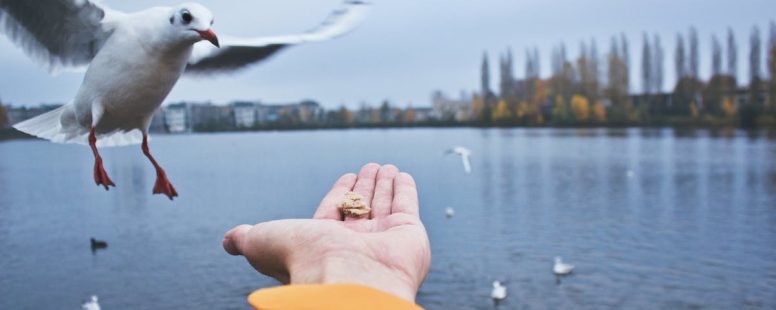
In urban environments, you might witness corvids strategizing around human activity, timing their foraging patterns to align with the disposal of waste or the presence of pedestrians feeding birds. These actions highlight their adaptability and cognitive prowess in both natural and man-made habitats.
Researchers have decoded some of the vocalizations specific to food discovery. For instance, a certain call from a crow may draw others to a newly discovered area rich in resources. Sharing information about food sources is vital to their survival, especially during harsh conditions when resources are scarce.
The ability to learn and mimic human-made sounds is another layer to their communicative competence. Corvids have been observed imitating car alarms or other mechanical noises, which can influence their interactions with each other and their environment.
These behaviors provide captivating insights into how the Corvid family uses communication as a tool to survive and thrive. Observing them is an opportunity to witness the evolution of avian social dynamics right before your eyes. By paying attention to the interactions within these bird communities, you gain a deeper appreciation for their complexity and the subtle ways they maintain their social structures through shared information.
Visual Cues and Rituals: The Dance of the Honeyguides
Have you ever witnessed a honeyguide bird in action? It’s a fascinating display of avian cooperation. These small, unassuming birds have a unique relationship with humans and other large mammals, guiding them to beehives. How do they do this, you might ask? Through an intricate dance that’s as effective as it is compelling.
When a honeyguide has spotted a beehive, it attracts the attention of a potential hive-looter by way of a specialized call. Once it’s caught your eye, or that of another mammal, it leads the way to the hidden treasure. The bird flits from tree to branch, pausing to ensure it’s being followed, clearly indicating the path with its body movements—dipping and bobbing rhythmically—a literal dance to dinner.
But why should you care about such a dance? Because honeyguides are a masterclass in non-verbal communication. Their behavior illustrates a complex understanding of mutual benefit and cooperation. The bird benefits by gaining access to the wax remnants after the larger animal breaks open the hive, a remarkable example of interspecies collaboration.
In the wild, instances of such calculated symbiosis are rare, making the honeyguide’s method all the more extraordinary. By observing them, scientists have gleaned insights into coevolution and communication strategies that transcend species boundaries.
For bird enthusiasts seeking to witness this, patience is key. One can’t simply stumble upon a honeyguide performance; you must be in the right place at the right time. Repeat interactions between honeyguides and their mammalian partners are frequent in areas where this behavior is common, so your chances improve if you’re in known honeyguide habitats.
It’s not just about the destination—the hive—but about the journey. The honeyguide’s dance emphasizes the potent role of visual cues in bird communication, enriching our understanding of how birds convey complex messages to different recipients. Their rituals shed light on the elaborate tapestry of nature’s communicative threads, an ever-evolving narrative woven by each species’ survival blueprint.
Birds as Social Networkers
Imagine the avian world as a vast social network, where birds are the users, constantly tweeting out locations of the best places to eat. Just like you’d share a top restaurant review, birds broadcast food locations to their feathered friends. Crows and ravens, for example, boast their own version of social media via their complex vocalizations and body language. They don’t just chirp idly; they’re conveying highly useful information that can mean the difference between a feast and a famine.
Communication is key in these bird networks. When a crow discovers a food source, it doesn’t keep the news to itself. Instead, it calls out to others, effectively inviting them to join in on the bounty. This isn’t an act of bird charity; it’s about survival and the social advantages that come with keeping allies well-fed. Through these interactions, birds like crows and ravens maintain intricate social hierarchies and strengthen their community bonds.
Corvids are not alone in this behavior. Take the honeyguide bird, which has taken the art of social networking to a higher level by engaging with humans and other large mammals. This bird doesn’t just hint at where food might be; it leads hunters straight to the prize with a well-choreographed dance. Their method isn’t just about finding food—it’s about forming strategic partnerships that benefit both parties involved.
By participating in these elaborate communication networks, birds not only inform each other about food sources but also create intricate social structures. They influence one another’s behaviors, establishing norms within their communities. What’s truly fascinating is watching these dynamics unfold, understanding that every chirp, dance, and display has a purpose in the grand scheme of their social networking cosmos. Keep an eye and ear out next time you’re outside—you’ll see the avian web of communication is not so different from our own digital age of connectivity.
Conclusion
You’ve discovered the fascinating world of bird communication and its vital role in survival and social interaction. Birds like crows and ravens don’t just chirp aimlessly; they’re actually sharing crucial information about food, showcasing the remarkable intelligence of our feathered friends. Your understanding of the honeyguide’s unique partnership with other species adds another layer to this complex communication web. It’s clear that birds are more than just creatures of flight—they’re social beings that rely on their ability to communicate, much like humans in our interconnected world. Keep your ears open next time you’re outside—you might just witness these avian conversations in action.

- How Much Does a Riding Lawn Mower Weigh? - January 9, 2026
- Can You Park Cars in Your Backyard? - January 3, 2026
- Understanding Drone Overflights and Privacy Concerns - January 3, 2026