Can Squirrels Swim? Surprising Facts & Safety Tips
Ever wondered if those agile little creatures darting around your backyard can handle a dip? You’re not alone. Many people are curious about whether squirrels, known for their climbing and jumping abilities, can actually swim.
It turns out, squirrels have a lesser-known talent that might surprise you. They’re not just land lovers; these furry critters have a knack for navigating through water as well. Let’s dive into the world of squirrels and uncover their aquatic capabilities.
Squirrels: Agile Land Lovers
While much of the conversation has revolved around their aquatic skills, it’s vital to recognize that squirrels are primarily designed for life on land. Agile and quick, these creatures have physical attributes that make them exceptionally adept at navigating the terrestrial terrain.
Their long, powerful hind legs allow them to leap distances many times their body length. Exceptional climbers, squirrels boast sharp, curved claws perfect for gripping tree bark, enabling them to ascend and descend with ease and finesse. On the ground, their swiftness helps them dodge predators and cover ground quickly when searching for food or shelter.
Squirrels also have a well-developed sense of vision which is particularly attuned to detecting motion. This visual acuity is paramount as it helps them stay vigilant and responsive to potential threats or opportunities in their environment. Coupled with their incredible agility, it’s clear why squirrels are so successful at thriving in a variety of landscapes, from dense forests to urban parks.
- Powerful hind legs for leaping
- Sharp claws for climbing
- Well-developed sense of vision
Their tails, besides being iconic, serve several purposes that enhance their terrestrial lifestyle. These bushy appendages help them maintain balance as they navigate narrow branches or make daring jumps. Additionally, squirrels use their tails as a signaling mechanism to communicate with one another, which is crucial for maintaining social structures and warning of danger.
As squirrels go about their daily routines, they’re constantly engaged with their land-based environment—gathering nuts, dodging traffic, or playing chase with their peers. Their innate abilities and physical adaptations underscore their status as land lovers, even amidst their surprising proficiency in water.
The Lesser-Known Talent: Swimming

While you’re aware squirrels are masters of the treetops, their swimming abilities are often overlooked. You might not spot them doing laps at your local pond, but when necessary, squirrels can swim. It’s not just a desperate act of survival either; they showcase a surprising level of proficiency in water.
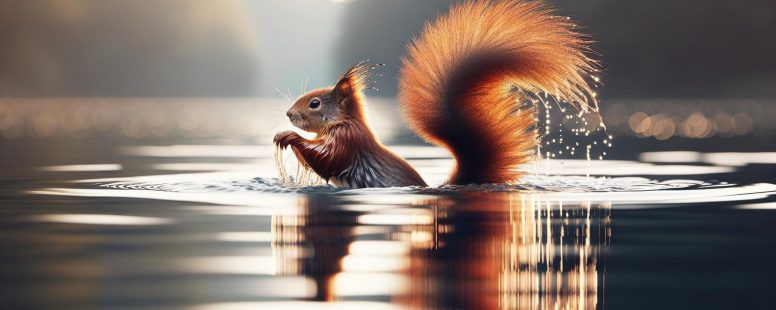
Their swimming technique is something to behold. Using a doggy paddle style, they thrust their legs rhythmically to propel themselves forward. Their bushy tails, usually seen flicking in the air for balance and communication, serve a new purpose in water. They act as rudders, steering squirrels across watery expanses.
Surprisingly, squirrels’ bodies are quite adaptable to water. Their legs, although primarily adapted for grabbing and climbing, can churn water effectively. Moreover, while their light body mass makes them expert climbers and jumpers, it also aids them in staying afloat.
Here’s a piece of trivia worth noting: squirrels are known to swim long distances if needed. Some have been observed crossing rivers as wide as a mile. This isn’t an everyday occurrence, but it demonstrates their adaptability and potential range of habitat.
These furry acrobats are also opportunistic in nature, not just on land but in aquatic environments too. They might take to the water to escape predators, find food, or even explore new territories. So next time you’re near a body of water, keep an eye out for these unexpected swimmers. You might just be surprised by the versatile abilities that squirrels bring to the table— or should we say, to the lake.
Adaptations and Abilities for Swimming

When you’re marveling at squirrels zipping through your yard, it might not cross your mind that these critters are also quite adept in the water. Their swimming capabilities are a less-known facet of their survival toolkit. But rest assured, they’ve got some nifty tricks up their furry sleeves—or should we say, in their physical makeup?
Squirrels have developed several physical adaptations that make them natural swimmers:
- Lightweight Bones: This feature gives them buoyancy, helping them stay afloat with less effort.
- Strong Muscles: Particularly in their hind legs, these muscles provide the necessary power for propulsion through water.
Their athletic prowess extends from the treetops to the water, where they exhibit a remarkable doggy paddle technique. Unlike other mammals that might become weighed down by a wet coat, squirrels have a water-resistant fur. This not only helps keep them dry but also reduces the drag as they move through the water.
In case you’re curious about how often they swim, it’s not an everyday occurrence. Swimming is generally a method of last resort, used in scenarios where they must escape predators or when food is scarce. They may also swim across small bodies of water to explore or expand their territory.
Squirrels factor in elements like the distance and current of water before taking the plunge. Their internal judgment call is crucial to avoid exhaustion or being swept away. It’s this sort of innate calculus that enhances their survival as they dash and paddle through their diverse habitats.
What’s particularly fascinating is observing their large, bushy tails in action. As they navigate the water, their tails become rudders, guiding them much like a boat’s steering mechanism. This just goes to show that their tails are multifunctional—vital for balance while leaping between trees and now as a steering aid in water.
The next time you’re around a body of water, keep an eye out. You might just witness one of these adaptable creatures showcasing their swimming abilities, adding another layer to your understanding of these intriguing animals.
Types of Water Squirrel Encounter

When you think of squirrels, you might not picture them paddling through water. However, these adaptable creatures come across various aquatic environments, some by chance and others by necessity. Streams and rivers can be common in a squirrel’s habitat, offering not just a potential source of hydration but also a corridor or barrier in their search for food and mates.
Ponds and lakes pose a different setting for squirrels, typically requiring them to swim longer distances. The still water of a pond might seem serene, but for a squirrel, it’s a test of endurance and skill. Despite their small size, they can cover impressive distances with their powerful legs and buoyant bodies.
During bouts of heavy rain, squirrels may also contend with temporary puddles and flooded areas. Unlike permanent bodies of water, these transient challenges can turn familiar terrains into unexpected obstacles. Thankfully, their instinctual swimming abilities kick in, guiding them across to dry lands.
Urban-dwelling squirrels face their own set of challenges with man-made water features such as swimming pools, water tanks, and garden ponds. While not part of their natural landscape, squirrels quickly learn to navigate these obstacles, showcasing their ability to adapt in a human-dominated environment.
It’s impressive how these creatures manage to navigate through such diverse waterways. Their agile movements and survival instincts are crucial, whether they’re casually crossing a brook or making a daring escape from predators by leaping into a lake. Squirrels showcase a remarkable level of dexterity and adaptability, solidifying their status as one of nature’s most versatile animals.
Whether by choice or by chance, squirrels demonstrate time and time again that they’re equipped to handle the wet elements. Swimming might be seen as a last resort, but it’s one that they can carry out with surprising proficiency.
Tips for Squirrel Safety in Water

When you think about squirrels, water safety isn’t likely the first thing that comes to mind. Yet, if you have a squirrel-friendly yard or are near water bodies, it’s vital to understand how to keep these creatures safe if they venture into the water. Squirrels can swim, but they’re not aquatic animals and could encounter risks like exhaustion or predators.
- Create escape routes: Ensure there are easy ways for squirrels to climb out of pools or ponds. A ramp or a series of stones leading to the edge can be lifesavers.
- Monitor water features: If you’ve got water in your yard, like a birdbath or water fountain, keep an eye on them. Small mammals might use these as water sources, and they should be shallow enough to prevent drowning.
- Keep pets at bay: Dogs or cats may frighten swimming squirrels, leading to panic and potential drowning. It’s best to supervise pets around areas where squirrels might be swimming.
Heavy rains or flooding can present significant challenges for squirrels. Their strong survival skills will kick in, but they might still need a helping hand.
- Check for trapped squirrels: After storms, look around your property for squirrels that might have been trapped or disoriented by rising waters.
- Provide food and shelter: Displaced squirrels might be hungry and exhausted. Putting out some nuts or seeds and a small box for shelter could give them the boost they need.
Always maintain a respectful distance from wildlife, including squirrels. While you may want to help, these animals are wild and can react unpredictably when afraid. Your intervention should be subtle and non-intrusive to avoid causing further stress.
Conclusion
You’ve learned that squirrels are indeed capable swimmers with natural adaptations for the water. Remember, while it’s fascinating to observe these agile creatures navigate aquatic environments, it’s crucial to prioritize their safety—and yours. Take proactive steps to ensure any water features in your yard are escape-friendly for your furry neighbors. During inclement weather, keep an eye out for these little swimmers and lend a hand if necessary, by providing food and shelter. Above all, respect their space and coexist peacefully with the wildlife around you. Your understanding and thoughtful actions can make a world of difference for these resourceful animals.

- How Much Does a Riding Lawn Mower Weigh? - January 9, 2026
- Can You Park Cars in Your Backyard? - January 3, 2026
- Understanding Drone Overflights and Privacy Concerns - January 3, 2026