Do Squirrels Eat Potatoes? Nutritional Impact Explained
Ever wondered what’s on the menu for your bushy-tailed backyard friends? You’re not alone. Many gardeners and nature enthusiasts ponder over what squirrels nibble on, especially when it comes to root vegetables like potatoes.
While you might be familiar with squirrels snacking on nuts and seeds, their diet is surprisingly diverse. In this article, you’ll discover whether potatoes are a squirrel’s treat or if they steer clear of this starchy veggie.
The Diet of Squirrels
Squirrels are notorious for their love of nuts and seeds, but you’ll find their dietary preferences are more broad than you might initially think. They’re typically herbivores, which means their diet includes a variety of plants, fruits, and veggies. It’s true they crave nuts like acorns and walnuts, which provide valuable nutrients and fat reserves for winter months. But squirrels won’t just stop there when it comes to their meals.
In urban and suburban settings, you might notice that these adaptable creatures aren’t picky. They’ll often munch on whatever’s available, including your garden vegetables or scraps left out by generous humans. Why does this matter? Because it means squirrels may indeed come across potatoes‚ and they wouldn’t necessarily turn their noses up at the opportunity for a bite.
While you might catch them nibbling on various flora, squirrels also have a bit of an omnivorous streak. Insects and small animals, such as caterpillars or young birds, can occasionally become part of their diet, particularly when other food sources are scarce.
To better understand a squirrel’s preference for potatoes, it’s helpful to know what else fills their plate:
- Nuts (Acorns, Walnuts, Pecans)
- Seeds (Sunflower, Pumpkin)
- Fruits (Apples, Berries)
- Vegetables (Carrots, Tomatoes)
- Insects (Caterpillars, Beetles)
It might seem surprising, but squirrels also consume high-calcium foods. These can include deer antlers or bones they find in the wild, vital for their bone health and dental integrity.
Given this array of diet choices, keep a close watch on your spuds; squirrels may just deem them a perfect snack. Their foraging nature and survival instinct drive them to sample and consume a wide range of edibles, potatoes included. Just remember, if you’re planting a vegetable garden with hopes of keeping your harvest, a squirrel-proof strategy might be necessary to deter these fluffy-tailed opportunists.
What Do Squirrels Typically Eat?

Imagine you’re watching a squirrel in your backyard, busily foraging for its next meal. You might think nuts and seeds are all it’s searching for, but squirrel diets are surprisingly varied. These small, agile creatures are mostly herbivorous, yet their eating habits can veer into the omnivorous realm depending on the season and available resources.
Essentially, squirrels are opportunistic feeders. Their diet typically includes:
- Acorns, walnuts, and other tree nuts
- Berries, apples, and other succulent fruits
- Bird eggs and fledglings when other sources are sparse
- Insects like caterpillars and grasshoppers in the warmer months
- Fungi and a range of mushrooms found in their habitats
- Plant materials, such as flower bulbs and various tender, leafy greens
During autumn, squirrels are particularly active. They gather and store food for the winter, and you’ll often see them with cheeks full of forage. In this season, nuts are abundant and serve as a rich source of fat and protein which are critical for sustaining them through the colder months.
In urban areas, squirrels have adapted to a wider range of food sources. They often munch on scraps left out by humans, from leftover pizza on the park bench to the contents of unsecured garbage bins. But significantly, this adaptability doesn’t mean all human foods are safe or healthy for squirrels—some can even be harmful.
Squirrels have a healthy appetite for vegetables as well, including carrots, squash, and you guessed it, potatoes. If you’re growing a veggie garden, it’s wise to take measures to protect your produce. A squirrel won’t typically pass up the chance to nibble on your veggies, given the opportunity.
Maintaining squirrels’ wild diet and not feeding them processed human foods can help keep local populations healthy. Remember, feeding wildlife can sometimes do more harm than good—best let them forage as nature intended.
Are Potatoes Part of a Squirrel’s Diet?

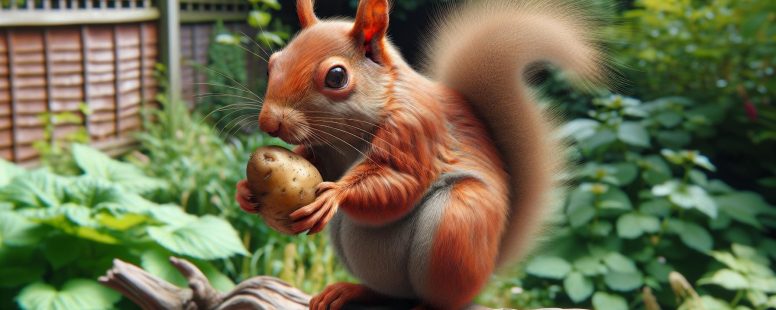
When you’re peeking out at your garden and spot a squirrel, you might notice it’s not just nibbling on the usual nuts and seeds. These critters are known for their varied eating habits. While their menu mainly features plant-based items, squirrels won’t pass up the chance to munch on your spuds.
Potatoes — yes, those starchy veggies you love to roast, mash, and fry – can attract the attention of a squirrel. In the wild, finding a potato might not be common, but in an urban setting or near cultivated areas, squirrels adapt and often help themselves to whatever is accessible.
Grains and fruits are staples in their diet, but did you know squirrels are flexible in their feeding habits? When their favored food is in short supply, they’ll go for what’s available. This includes the potatoes in your garden. Whether they’re after the tuber itself or the tender shoots, squirrels are pretty resourceful.
When food is plentiful, squirrels may be pickier, but in leaner times, they’ll eat a wider range. If you’ve got potatoes growing outdoors, safeguarding them might be wise. Squirrel-proofing measures, like fences or netting, can deter these agile foragers.
Here’s what squirrels’ dietary preferences include:
- Plant materials like nuts, seeds, and fruits.
- Insects, small animals, and eggs to supplement their intake.
- Vegetables, including potatoes, especially when typical food sources dwindle.
Seasonal Changes also play a role in a squirrel’s eating behavior. As seasons shift, so do the types of food squirrels seek out. They hoard their favorites – like acorns – for winter, but they’re not against digging up a spud when the pickings are slim.
Watching squirrels in your yard can be a delight, and understanding what they eat helps keep them – and your garden – flourishing. Remember, while they’re adaptable eaters, keeping their wild food sources abundant is vital for their health and the well-being of the ecosystem. Protect your potatoes but respect their needs – it’s all about balance.
Nutritional Value of Potatoes for Squirrels

Potatoes, often a staple in human diets, hold substantial nutritional benefits for squirrels as well. These tubers are rich in vitamins and minerals that are vital to the health of these agile rodents. Let’s break down what makes potatoes a good fit for a squirrel’s diet.
Vitamins: Potatoes contain vitamin C and vitamin B6, both of which contribute to a squirrel’s overall wellness. Vitamin C is an antioxidant that supports the immune system, while vitamin B6 is crucial for brain health and metabolism.
Minerals: They also offer minerals like potassium and magnesium. Potassium helps with muscle and nerve function, and magnesium is essential for healthy bones–important for creatures that spend their days leaping from tree to tree.
Beyond these, potatoes are a source of complex carbohydrates. These provide squirrels with energy to scurry and forage. However, they should be considered a part of a varied diet rather than a main food source. Here’s a quick snapshot of the nutritional content of potatoes:
| Nutrient | Quantity |
|---|---|
| Calories | 77 kcal/100g |
| Protein | 2g/100g |
| Carbohydrates | 17g/100g |
| Fiber | 2.2g/100g |
| Vitamin C | 19.7mg/100g |
| Vitamin B6 | 0.3mg/100g |
| Potassium | 421mg/100g |
| Magnesium | 23mg/100g |
When squirrels munch on potatoes, they’re not just filling their bellies; they’re also fueling their bodies with these key nutrients. But, remember, moderation is key. Too much of any single food type can disrupt a squirrel’s diet, which naturally includes a wide range of foods.
Keep in mind, when it comes to feeding wild animals, it’s always better to let them find food naturally. This encourages foraging behaviors and helps maintain their instinctual habits. If you’re growing potatoes in your garden, this information can be especially useful. Understanding the dietary impact of potatoes on squirrels can help you decide how to manage these furry visitors in your backyard.
Conclusion
Potatoes can be a nutritious addition to a squirrel’s diet, offering essential vitamins and energy-boosting carbs. Remember, moderation is key, and it’s best to let squirrels forage naturally. By understanding their dietary needs, you’ll be better equipped to coexist with these playful creatures in your garden. Keep their meals diverse and watch them thrive!

- How Much Does a Riding Lawn Mower Weigh? - January 9, 2026
- Can You Park Cars in Your Backyard? - January 3, 2026
- Understanding Drone Overflights and Privacy Concerns - January 3, 2026