
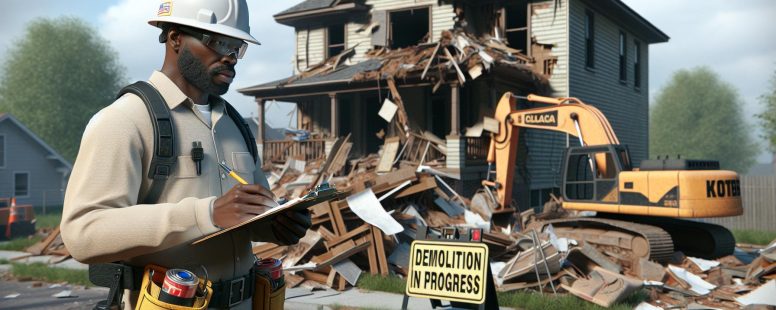
Understanding Demolition Permits: Do You Need One to Tear Down Your House?
Ever thought about tearing down that old, dilapidated house on your property? You’re not alone. Many homeowners consider demolition as a viable option for making way to something new and improved. But here’s the catch: do you need official permission before you can swing that wrecking ball?
Understanding House Demolition
In the area of property development, house demolition plays a pivotal role. It’s not just about knocking down walls and hauling away rubble—it’s an intricate process requiring careful planning.
Meaning and Importance of House Demolition
House demolition refers to the act of tearing down an existing structure on your property, making way for new construction or landscaping projects. This operation isn’t taken lightly as it involves significant investment in terms of time, money, and resources.
Demolishing a house can be crucial when renovating isn’t practical due to structural issues or cost-effectiveness. A clean slate allows you to build something that suits your needs better than trying to mold old structures into modern designs. But, before swinging that wrecking ball around freely, remember there are legalities involved like obtaining permits from local authorities—a subject we’ll dive deeper into further below.
Why Do You Need a Permit to Demolish a House?
A permit for house demolition isn’t just an arbitrary document; it’s crucial for ensuring the safety and legality of your actions. This requirement stems from local building codes, regulations, planning, and zoning rules.
The Role of Local Building Codes and Regulations
Local building codes exist primarily to ensure public health, safety, and general welfare as they relate to construction practices. These standards guide how buildings get built or demolished in any given location. A demolition permit guarantees that these requirements are met during the process of tearing down your structure.
For instance: In Los Angeles County Code § 12.08 states that no person can demolish any structure until all necessary permits have been secured from the Department of Regional Planning (DRP). Violating this regulation could lead you into legal issues including fines or penalties.
Further specific guidelines may be laid out by other regulatory bodies like Environmental Protection Agency(EPA) related specifically towards disposal methods post-demolition with respect environmental sustainability measures such as asbestos abatement plan when dealing older structures.
This is where obtaining proper permissions comes handy! It not only ensures adherence state-imposed guidelines but also safeguards against potential lawsuits property damage claims neighbors potentially affected project.
Exploring Planning and Zoning Rules
Planning departments manage land use in their jurisdictions through zoning laws which dictate what activities are permitted on different parcels within city limits – everything residential housing commercial real estate industrial complexes parks open spaces fall under purview department depending area situated at.
Let’s consider New York City example Here various districts classified Residential(R) Commercial(C), Manufacturing(M). Each district has its unique set controls define allowed uses density development size shape new constructions conversion existing buildings etc.
Before deciding upon renovate old dilapidated home perhaps build something entirely fresh place importance acquiring correct cannot understated helps maintain orderly growth community while respecting rights property owners prevent conflicts among them avoid incompatible developments So next time wonder ‘do need permit demolish house?’ remember it’s just about getting official approval tearing down structure It’s also being responsible citizen understanding role regulations play ensuring safety welfare those around you.
Steps to Obtain a Demolition Permit
In the preceding section, we’ve discussed why obtaining a demolition permit is vital. Let’s investigate deeper into how you can secure one for your house demolition project.
Identifying the Right Authorities
Identify local authorities in charge of issuing permits—typically Building and Safety or Planning Departments within city halls, county offices, or municipal corporations—for example, Los Angeles County Department of Regional Planning. Contacting these bodies clarifies which specific department handles permitting for residential demolitions.
Also:
- Verify whether zoning rules impact your property
- Confirm if any special restrictions apply due to historical preservation regulations
- Ensure all applicable codes and standards are satisfied before initiating work
Remember: Failing compliance might lead to legal issues later on!
Documentation and Application Process
Gathering necessary documents remains essential when applying for a permit:
- Detailed Project Plan: This includes site plans displaying existing structures’ locations slated for removal.
2.Proof of Ownership: Copies of property deeds authenticate ownership status.
3.Contractor Information: Provide licensed contractor details handling this project (license number, name).
4.Insurance Proof: Show evidence that both you’re insured against potential damages during operations as well as workers’ compensation coverage by hired contractors.
Submit applications either online or personally at relevant government office along with required fees. Fees vary based on factors like location size etc., hence check local rates beforehand!
After submission? Be patient; processing time varies but expect approximately two weeks typically—a perfect opportunity perhaps dust off those long-forgotten renovation blueprints meanwhile?
The Consequences of Unlawful House Demolition
Neglecting to secure a permit before demolishing your house can result in severe repercussions, ranging from legal and financial ramifications to safety risks and environmental impact. Let’s investigate deeper into these consequences.
Legal and Financial Ramifications
Ignoring the need for a demolition permit exposes you directly to potential legal problems. Local authorities have strict regulations on property development activities, including home demolitions. If caught conducting an unlawful demolition, you’ll likely face fines or even lawsuits filed by local governments or disgruntled neighbors who may be affected by your actions.
Financially speaking, it’s not just about paying fines; there are long-term impacts too! For instance, if found guilty of violating building codes or zoning laws during this process – let alone damaging another person’s property- insurance companies might refuse coverage for any related damages incurred throughout construction projects that follow the illegal demolition (talk about adding insult to injury). Plus dealing with lengthy court proceedings could delay future developments indefinitely – meaning more costs over time!
Also consider how such actions affect resale value: prospective buyers might shy away from properties involved in previous litigation cases about non-compliance with planning rules.
Safety Risks and Environmental Impact
Unpermitted house demolitions aren’t merely legally problematic; they’re also incredibly dangerous! Without adequate safety measures typically required under permits—like asbestos abatement plans—you run risk exposing yourself & others around harmful substances often present older structures which can lead serious health conditions like lung cancer mesothelioma down line… definitely something don’t want on conscience!
Equally crucial is recognizing uncontrolled destruction poses significant threats environment as well degrading air quality due dust debris potentially releasing toxic chemicals ground water causing pollution negatively impacting wildlife habitats nearby ecosystems especially when larger scale operations play out. It bears repeating again: Always ensure proper disposal hazardous materials accordance appropriate guidelines laid out Department Environment Protection Agency other similar bodies avoid contributing further environmental degradation.
Case Studies: Demolition Permits Across Different States
Diving deeper into the regulations and requirements for demolition permits, let’s focus on two specific states: California and Texas. The rules vary from state to state, making it important to understand your local guidelines.
Demolition Permit Requirements in California
In sunny California, getting a permit isn’t as simple as applying sunscreen at the beach. Here are some facts you might find interesting:
- Jurisdiction Matters: Your city or county building department provides demolition permits here.
- Project Scope: You must provide details about what you’re demolishing—whether it’s an entire house or just part of one.
- Contractor Licensing: Employing a licensed contractor is critical—they’ll need their license number handy when submitting applications!
- Asbestos Inspection An asbestos inspection report by certified professionals helps ensure safety measures against harmful substances exposure during demolition work.
5.Finally,Fees, Yes! Like everything else in life that requires paperwork, there’s usually a fee attached – this could range anywhere between $50-$150 depending on locality specifics.
So before hitting those walls with a sledgehammer remember these points!
Demolition Permit Requirements in Texas
Lone Star State has its own set of unique prerequisites before saying ‘Adios’ to any structure:
1 . In most cities across Texas like Houston & Austin,the responsible authority providing such permission falls under the Public Works Department – hence know thy office well!
2 . Details about existing utilities connections also form integral submission component.This includes plumbing,gas lines etc- basically anything that can cause potential hazards post-demolitions
3 . Hazardous Material Survey too features prominently among necessary documentation,ahead proceeding further,this survey aims identifying presence (if any)of materials hazardous nature e.g Asbestos ,Lead-based paints et al .
4.Prepare yourself shelling out fees! Texas too levies permit fee which can vary significantly depending on structure size and other project specifics .
The takeaway here? Whether you’re in California or Texas, getting a demolition permit isn’t as simple as snapping your fingers. Each state has its own set of rules to protect both homeowners and the environment – so it’s best not to take any shortcuts.
Conclusion
So, you’ve seen the ins and outs of house demolition. Yes, a permit is required for this significant task. It’s not just about tearing down walls; it’s a process that ensures public safety and aligns with local regulations.
Acquiring your demolition permit involves contacting appropriate authorities in your area like Building Departments or Planning Departments. Keep tabs on zoning rules and potential restrictions while also having necessary documents ready for submission including proof of ownership project plans insurance information among others.
Skipping these crucial steps can land you into hot waters both legally financially even environmentally speaking! Be aware that unpermitted demolitions come with severe consequences which could affect property value insurance coverage apart from legal issues fines.
Whether in California Texas or any other state be mindful to follow region-specific requirements correctly as they differ based on varying factors within each location ensuring safe compliant house demolition every time.

- How Much Does a Riding Lawn Mower Weigh? - January 9, 2026
- Can You Park Cars in Your Backyard? - January 3, 2026
- Understanding Drone Overflights and Privacy Concerns - January 3, 2026


