Practical Guide to Blocking Water Drainage from Your Neighbor’s Yard
Ever found yourself knee-deep in water because your neighbor’s yard drains into yours? It’s a common problem many homeowners face, and it can turn your beautiful garden into a swampy mess. But don’t fret – there are practical solutions to this watery dilemma.
Understanding the Issue of Water Drainage from Neighbor’s Yard
Drainage issues between neighboring yards can become problematic, potentially leading to disputes. It is essential for homeowners to understand these problems and learn how they can deal with them effectively.
The Hazards of Improper Water Drainage
Excessive water drainage from a neighbor’s yard poses potential hazards. Firstly, it results in soil erosion that affects the world design you’ve invested time and effort into perfecting. For instance, if your flower beds or vegetable gardens are continually being flooded by excess water flow, this could result in plants dying off due to overwatering.
Secondly, standing water forms breeding grounds for insects like mosquitoes which carry diseases such as Zika virus and Malaria among others; certainly not guests anyone would want at their summer barbecue!
Thirdly – let’s talk about structural damage! When there’s constant flooding around the foundation walls of your home (especially basements), this may lead to dampness seeping through resulting in mold growth – an environmental hazard affecting indoor air quality while also posing health risks including allergic reactions and respiratory disorders.
Legal Aspect of Water Drainage from Neighbor’s Yard
The legal aspect associated with improper drainage concerns ‘natural’ vs ‘unnatural’ flows where natural refers simply as rainfall runoff flowing downhill following gravity whereas unnatural means any alterations made causing changes in direction/quantity/speed.
Assessing the Current Drainage System
The journey to effectively block water drainage from your neighbor’s yard starts with understanding the existing situation. This section breaks down how you can accomplish that.
Identifying the Source of the Drainage
First, it’s crucial to locate where exactly this excess water originates from. It could be a natural source such as rainfall or an artificial one like irrigation systems in your neighbor’s lawn. Check for visible signs including persistent wet spots or areas where grass and plants grow more vibrantly due to increased hydration levels (remember, they love their H2O!). You might also see indicators like soil erosion on sloping grounds suggesting excessive runoff. By pinpointing these sources, you position yourself better at implementing measures aimed towards preventing unwanted flooding.
Spotting Signs of Surface Water Drainage
Identifying surface water drainage is equally essential in comprehending what happens once this excess water reaches ground level. Look out for elements such as puddles forming after rainfalls – they’re not just perfect splashing opportunities but clear evidence of poor surface absorption! Another indicator is “channelized” flow; if there are small rivers flowing across yards during rains, that implies inadequate containment mechanisms are present.
Also note areas experiencing rapid plant growth: high moisture availability tends to encourage flourishing vegetation!
Once identified correctly, these problem zones offer clues about necessary adjustments required within your current world design – perhaps additional gutters are needed or modifications made about property grading patterns?
Easy Techniques to Block Water Drainage
Addressing the issue of water drainage from a neighbor’s yard involves two principal strategies: Installing rain gardens or drainage swales, and using dry wells or French drains. These techniques serve as effective solutions for diverting excess water away from your property.
Installing Rain Gardens or Drainage Swales
Rain gardens function by absorbing runoff water, making them an ideal choice when combating unwanted neighborhood drainages. You place these shallow depressions in strategic areas where they can intercept runoff flow before it reaches problem zones on your land. Plant selection is crucial here; you opt for native plants that thrive in both wet and dry conditions.
Drainage swales act like ditches but with more finesse – serving dual purposes of aesthetic appeal and practical use! They guide stormwater across landscapes towards predetermined exit points, effectively preventing accumulation at undesired locations.
Usage of Dry Wells or French Drains
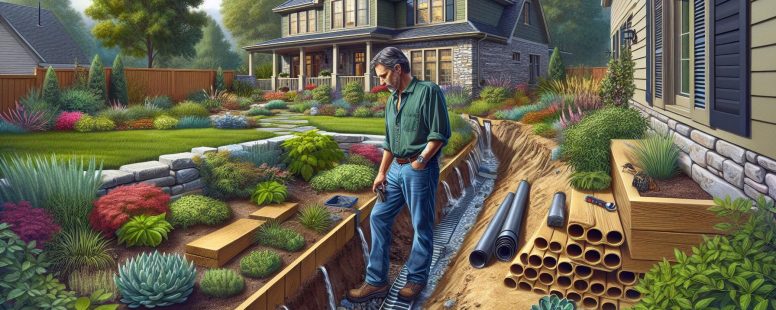
Dry wells offer another viable option to prevent flooding caused by neighboring yards’ runoffs. A simple yet ingenious design – holes dug deep into the ground filled with gravel acting as temporary storage tanks for excessive rainfall which then gradually permeates back into surrounding soil layers!
The Process of Building a Retaining Wall
In this section, you’ll investigate into the process of building a retaining wall. This technique not only blocks water drainage from your neighbor’s yard but also adds aesthetic value to your property.
Choosing the Right Materials
The choice of materials for constructing a retaining wall varies based on factors such as cost, durability, and aesthetics. Commonly used materials include concrete blocks, poured concrete, timber or stones.
- Concrete Blocks: These are affordable and easy to work with in terms of installation.
- Poured Concrete: If longevity is your priority then opt for poured concrete—it’s robust and can last many years without much maintenance.
- Timber: For those seeking an attractive natural look may find wood appealing; but bear in mind that it doesn’t provide long-term resilience against weather elements compared to other choices.
4 .Stones: Stones offer both strength plus beauty making them popular amongst homeowners who prefer sturdiness combined with visual appeal.
It’s worth noting here that regardless which material you select all require some form basic preparation like ensuring adequate drainage behind walls themselves prevent build-up pressure causing structural damage over time.
Steps to Construct a Retaining Wall
Following through these steps ensures efficient construction:
1.Establish Layout:
Start by marking out area where you plan install structure using stakes string lines giving clear guide follow during excavation phase project
2.Excavation:
Excavate base trench according chosen design guidelines taking care avoid unnecessary soil erosion nearby plants structures
3.Prepare Foundation:
Next prepare foundation compacting gravel layer creating stable surface lay first course block stone etc Depending type selected might need additional reinforcement such steel bars mesh maintain stability throughout height whole construct
4.Build Wall:
Begin laying courses carefully checking each level accuracy alignment Remember incorporate drainpipes weep holes aid removal excess moisture behind
Professional Solutions for Blocking Water Drainage
As the article progresses, it’s time to investigate into professional solutions. It’s vital to consider expert help when dealing with water drainage issues from a neighbor’s yard. This section discusses two main options: hiring a world architect and seeking assistance from specialized drainage companies.
Hiring a World Architect
A world architect serves as an invaluable asset in combating troublesome water runoff situations. Possessing extensive knowledge about land grading patterns, plant species suited for varying moisture conditions, and design of effective rain gardens or swales – these professionals can offer custom-designed solutions tailored to your property needs.
For instance, they perform thorough assessments of existing landscapes (1), identify sources causing poor absorption like compacted soil areas (2), then create designs that incorporate necessary adjustments such as modifying grading patterns or adding gutters(3). By involving them early on in addressing the problem you avoid wasteful trial-and-error approaches; instead receiving strategies based on proven techniques ensuring optimal results.
Seeking Assistance from Drainage Companies
Drainage companies specialize in mitigating flooding problems through advanced technical methods which include installation of French drains and dry wells among others. These businesses possess high-grade equipment able to handle tasks beyond homeowner capabilities – trench digging tools for drain installations are prime examples here (4).
Hiring their services ensures efficient handling of complex projects including building retaining walls designed not only to block unwanted water flow but also enhance overall aesthetic appeal via selection of suitable materials like concrete blocks or stones(5). Also by utilizing industry-standard practices during construction processes —such as proper foundation preparation—these firms provide assurance against potential structural damage over time due faulty execution often seen amateur attempts at tackling similar undertakings independently.
Communicating with Your Neighbor about The Drainage Issue
After assessing your yard’s drainage system and identifying strategies to block water runoff from a neighbor’s property, it becomes crucial to communicate these issues effectively. A proactive discussion can often prevent disputes or misunderstandings in the future.
Diplomatic Approach Towards the Problem
Your first step involves initiating an open conversation with your neighbor. It’s always best if you approach this subject diplomatically – after all, they might not even realize their garden is causing problems for yours! Use specific examples such as noticeable soil erosion or visible puddles forming on your side of the boundary line when discussing what you’ve observed. Make sure to keep emotions out of it; stick strictly to facts while expressing concern rather than blame.
Offer potential solutions that may benefit both properties like suggesting shared costs for installing French drains or dry wells which help manage excess rainwater without affecting each other’s yards negatively. Alternatively, discuss landscaping changes such as modifying grading patterns or planting native species adapted towards varying moisture conditions — actions beneficial for local ecosystems too!
Remember: patience plays a key role here since change won’t occur overnight but steady progress will lead us down the path toward resolution.
Legal Procedures if Negotiations Fail
Unfortunately, not every diplomatic initiative results in mutual agreement and sometimes legal procedures become necessary when negotiations fail.
In most states across America homeowners bear responsibility about how water flows off their land so regulations are generally well defined by local authorities who enforce them accordingly through various laws related specifically towards surface runoffs & stormwaters management .
If conversations hit dead ends consider hiring an attorney specializing in real estate law—someone experienced handling cases involving “unnatural” water flow between adjacent properties could be helpful during dispute resolutions . Also , contacting county building inspection department directly gives insight into whether neighbors have violated any codes unknowingly leading possibly towards quicker remedial action taken against excessive flooding caused due primarily lack proper containment mechanisms installed prior hand .
Please remember this should always be a last resort and it’s highly recommended to try resolving any issues amicably before proceeding down the legal route. It not only preserves neighborly relationships but also saves time, money, and energy that are better spent enhancing your home environment rather than fighting in courtrooms.
Conclusion
You’ve got this! You’re equipped with the knowledge to tackle water drainage issues head on. From understanding your current system, spotting signs of poor absorption and strategizing how best to block runoff from a neighbor’s yard, you’re ready for action. Whether it’s installing rain gardens or dry wells or even constructing an attractive retaining wall – these solutions are all within reach.
Remember, professional help is also available when needed: world architects can provide custom-designed plans while specialized companies offer technical expertise in tackling more complex projects. And let’s not forget communication—it plays a vital role here too—start those conversations with neighbors and work towards mutually beneficial resolutions together.
Now armed with practical strategies as well as legal insights, you’re set up for success in maintaining both a healthy garden and good relationships around your neighborhood boundaries!

- How Much Does a Riding Lawn Mower Weigh? - January 9, 2026
- Can You Park Cars in Your Backyard? - January 3, 2026
- Understanding Drone Overflights and Privacy Concerns - January 3, 2026